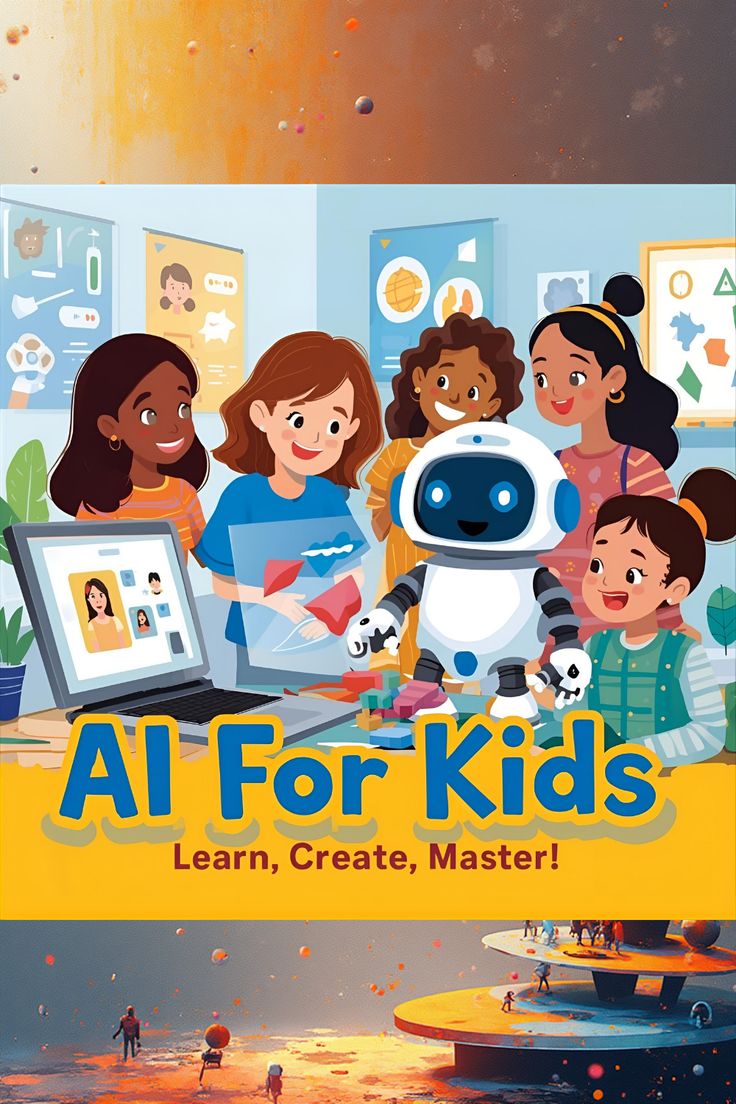
AI isn't just the future it's already the present. Parents who introduce their kids to AI tools early aren't raising screen addicts, they're raising critical thinkers, creators, and problem-solvers. Here's why giving your 7-year-old a head start with AI might be the smartest parenting move you make this decade.
Curiosity & Critical Thinking
Seven-year-olds are natural scientists. They question everything, break everything, and want to understand how the world works. AI tools meet that curiosity at full speed. When a child asks an AI "why is the sky blue?" and then follows up with "but why does light do that?" — they aren't just getting answers, they're learning how to ask better questions. That skill, the ability to probe, challenge, and think critically about information, is one of the most valuable traits a child can carry into adulthood. Exposing kids to AI early teaches them that knowledge isn't a destination, it's a conversation. And the kids who learn to hold that conversation well? They'll lead the ones who didn't.
Creativity & Imagination: Give a Child a Paintbrush and They'll Draw. Give Them AI and They'll Build Worlds.
Children are naturally creative — but they're often limited by what their hands can execute. A 7-year-old might have an incredible story in their head but struggle to write it out. AI tools bridge that gap. With the right tools, kids can co-write stories, generate illustrations for their ideas, compose simple music, and bring imaginary worlds to life in ways that were impossible for previous generations. This doesn't replace their creativity — it amplifies it. The child isn't outsourcing imagination; they're gaining a creative partner that takes their ideas seriously. Early exposure to AI as a creative tool teaches children that technology is something you create with, not just something you consume. That mindset shift alone is worth everything.
Problem-Solving & Logical Thinking: Chess Was Yesterday. Teaching Your Kid to Think Like an Algorithm Is Today.
When children interact with AI tools — especially coding platforms, logic games, and AI assistants — they begin to think in systems. They learn that every problem has inputs, processes, and outcomes. They learn that how you frame a question changes the answer you get. They learn that trial, error, and refinement are not signs of failure — they're the process. These are the foundations of computational thinking, and they apply far beyond technology. A child who learns to break a big problem into smaller steps at age seven will approach school projects, conflicts, and eventually career challenges with that same structured clarity. AI doesn't just teach kids about technology. It teaches them how to think.